Featured Bathroom Care
What is soap scum?
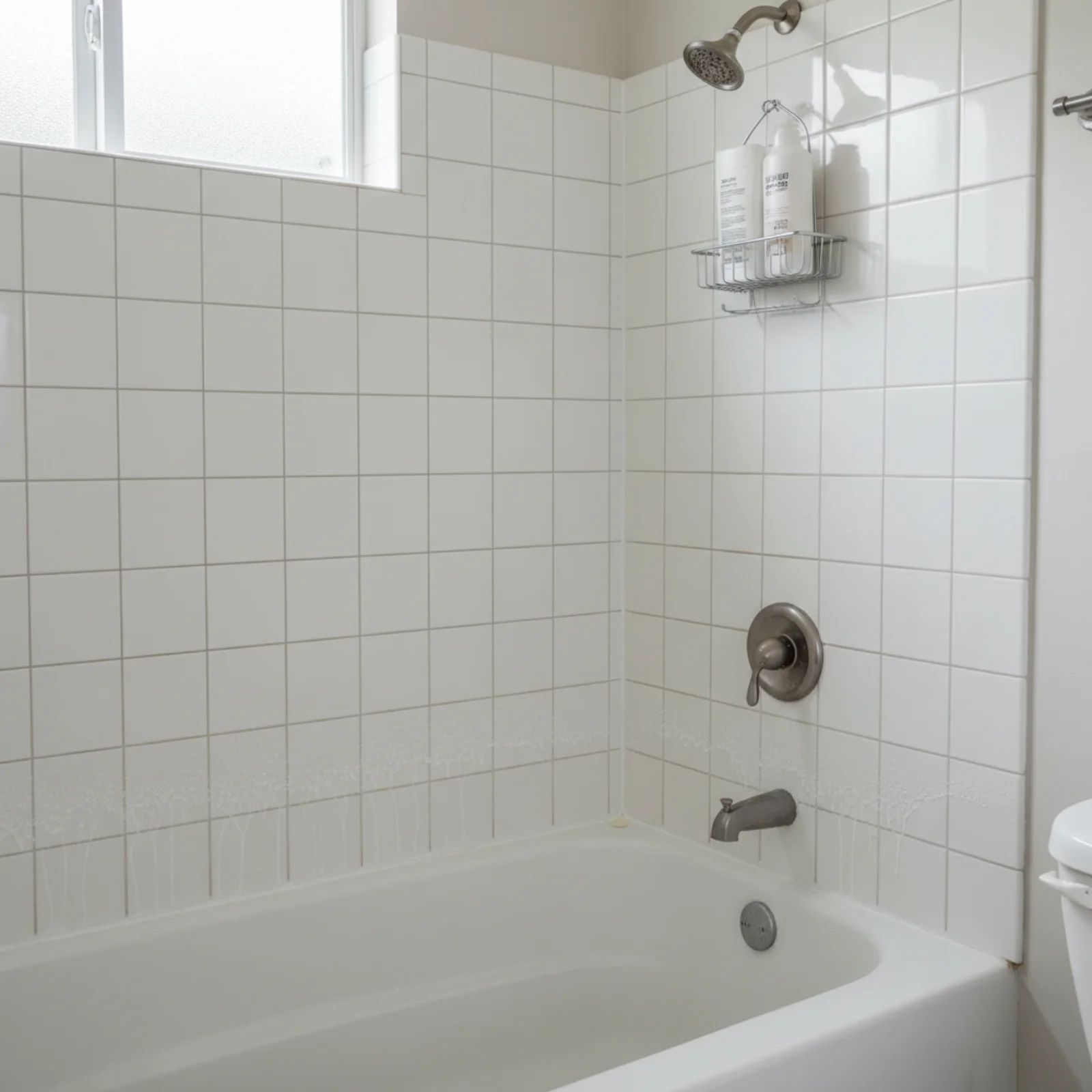
"That cloudy, chalky film on your shower door is not just dirt. It is a chemical reaction happening every time you shower. Here is what soap scum actually is, why your bathroom keeps developing it, and how to get rid of it for good."
Introduction
You scrubbed the shower last weekend.
It is Friday now. You walk in, glance at the glass door, and see it again. That foggy, streaky, chalky film that just keeps coming back no matter how hard you cleaned. The faucet looks dull. The tile grout has a grayish cast that was not there a few months ago. And no matter what spray you buy at the store, the bathroom never quite feels new again.
If you live in Fargo, West Fargo, Moorhead, Horace, Casselton, Harwood, Kindred, or Mapleton, this is not your imagination. North Dakota homes deal with soap scum more aggressively than homes in many other parts of the country, and the reason is something most people never think about. This article walks you through exactly what soap scum is, why our local water makes it worse, and how to actually get rid of it instead of just temporarily wiping it away.
What is soap scum, exactly
Soap scum is the cloudy, waxy, sometimes chalky residue that builds up on bathroom surfaces over time. Most people assume it is just dried soap. It is actually something more specific, and understanding the chemistry is the key to getting rid of it.
When traditional bar soap or certain liquid soaps mix with hard water, the calcium and magnesium minerals in the water react with the fatty acids in the soap. The result is a sticky, insoluble compound that bonds to whatever surface it lands on. That compound is soap scum. It is not soap that has dried out. It is a new substance entirely, formed by a chemical reaction between your water and your soap.
That chemistry is why soap scum is so frustrating to deal with. A regular surface cleaner is designed to dissolve dirt and grime. Soap scum is bonded to the surface at a molecular level, which means most generic cleaners simply slide off it without breaking it down. You scrub, you wipe, the surface looks clean for a moment, and then within days the film returns because the underlying buildup was never actually removed.
This is also why soap scum tends to get worse over time if it is not addressed properly. Each layer bonds to the previous one. What starts as a barely visible haze becomes a thick, hardened deposit that requires aggressive treatment to fully remove.
Why North Dakota homes get it worse
Here is the part that surprises most people. The Fargo-Moorhead metro area, along with most of the surrounding North Dakota communities, sits in a region with moderately hard to hard water. The mineral content varies by municipality and by individual home, but homes in Fargo, West Fargo, Horace, Harwood, Casselton, Kindred, Mapleton, and Moorhead are generally dealing with water that contains higher levels of calcium and magnesium than the national average.
That matters because hard water is the primary ingredient in soap scum. The harder the water, the more aggressively soap scum forms. Homes with private wells or older plumbing systems often see even higher mineral concentrations. Combined with North Dakota's long winters, where everyone is showering with the windows closed and the heat running, you have ideal conditions for soap scum to build up faster than it would in a milder climate.
This is why bathrooms in our area need a different approach than what generic cleaning advice on the internet usually recommends. Strategies that work fine for a home in a soft-water region simply do not cut through the kind of mineral-heavy buildup we see in Fargo and the surrounding communities.
Where soap scum hides in your bathroom
Soap scum is most visible on glass shower doors and tile, but it actually accumulates everywhere water and soap come into contact. Once you start looking, you will notice it in places you never thought to clean.
The most common spots include:
- Glass shower doors
- Ceramic and porcelain tile
- Grout lines
- The inside of bathtubs
- Faucet handles and bases
- The underside of soap dishes
- The surface of the shower floor
- Drain covers
- The lower edges of mirrors that get splashed
- The seal around the bathtub
- Corners where two surfaces meet
Grout lines deserve special mention. Because grout is porous, soap scum sinks into it rather than sitting on top. This is why even a freshly scrubbed shower can still look grayish or dingy along the lines between tiles. The buildup is happening below the surface, not on top of it.
How to remove soap scum (by surface)
Different bathroom surfaces respond to different cleaning approaches. Using the wrong method on the wrong material is the fastest way to either fail to remove the scum or damage the surface trying.
Glass shower doors and panels
Glass is one of the most forgiving surfaces and one of the easiest to restore. The most effective home approach is white vinegar and dish soap. Mix equal parts of warm white vinegar and dish soap in a spray bottle, apply generously to the affected area, and let it sit for at least fifteen minutes. The vinegar breaks down the mineral component of the soap scum while the dish soap dissolves the fat-based residue. Wipe down with a non-abrasive sponge and rinse thoroughly with warm water.
For thick, long-standing buildup, repeat the process or extend the sit time to thirty minutes.
Ceramic and porcelain tile
A baking soda paste works well on glazed tile. Mix baking soda with a small amount of water to create a thick paste, apply to the affected area, and let it sit for ten to fifteen minutes. Scrub gently with a soft brush or sponge in a circular motion, then rinse thoroughly. For more stubborn buildup, apply the same vinegar and dish soap solution used on glass.
Avoid steel wool or harsh abrasive pads. They can scratch the glaze and create texture that holds future soap scum even more aggressively.
Grout lines
Grout requires extra patience. Use a paste made from baking soda and hydrogen peroxide, applied directly to the grout lines with an old toothbrush. Let it sit for at least twenty minutes before scrubbing. For severely darkened grout, you may need to repeat the process two or three times. Sealing the grout after cleaning helps prevent future buildup from sinking back in.
Fiberglass and acrylic tubs and shower enclosures
These materials scratch easily, so abrasive cleaners are off the table. A solution of warm water, dish soap, and baking soda applied with a soft sponge is the safest effective approach. Let it sit for ten minutes before wiping clean. Avoid anything containing solvents or strong acids.
Faucets, fixtures, and chrome
A cloth soaked in white vinegar wrapped around the affected fixture and left to sit for thirty minutes will dissolve most mineral and soap scum buildup. Wipe clean with a microfiber cloth and dry thoroughly to prevent water spots from re-forming.
How to prevent it from coming back
Removing soap scum is half the battle. Keeping it from returning is what most people give up on.
The most effective long-term prevention is switching from bar soap to a body wash or liquid soap. Bar soap contains the fatty acids that react most aggressively with hard water minerals to form soap scum. Liquid soaps and body washes are formulated differently and produce significantly less residue.
Beyond that, a few small habits make a major difference. Squeegee your shower glass after every use. It takes thirty seconds and removes the water before it has time to dry and leave behind mineral deposits. Run the bathroom fan during and after every shower to reduce humidity. Wipe down faucets and tile with a microfiber cloth once a week. Apply a water-repellent treatment to glass shower doors every few months.
For Fargo-area homes specifically, where hard water is the underlying cause, the most powerful long-term solution is a water softener. It is a larger investment, but it eliminates the chemical reaction at its source. Homes with water softeners see soap scum reduced by an enormous margin compared to homes without them.
When to call in a professional
There comes a point where home methods stop being enough. If your bathroom has years of accumulated soap scum, hardened grout buildup, or fixtures that look permanently dulled despite repeated cleaning, professional restoration is often the most efficient and cost-effective path forward.
Deep Care Residential Cleaning provides professional bathroom deep cleaning services across Fargo, West Fargo, Moorhead, Horace, Casselton, Harwood, Kindred, and Mapleton. Our home cleaners are trained in surface-specific cleaning protocols, which means we know how to handle glass, tile, fiberglass, natural stone, and grout without damaging any of them. We bring professional-grade products and the time required to actually restore a bathroom rather than just freshen it up.
A professional bathroom deep clean from Deep Care does not just address soap scum. It addresses the buildup, the grout discoloration, the soap and mineral residue on fixtures, and all the small details that accumulate over time and quietly make a bathroom feel less than its best. If you have been scrubbing for months and the bathroom still does not feel clean, that usually means the buildup has gone past the point where surface cleaning can solve it.
Conclusion
Soap scum is not just dirt. It is a chemical reaction between your soap and your water, and in the Fargo-Moorhead area, that reaction happens more aggressively than most people realize. The good news is that with the right approach, even years of buildup can be removed and prevented from coming back.
Use the right method for your specific surface. Switch from bar soap to liquid where you can. Squeegee, ventilate, and stay on top of small habits that keep buildup from forming in the first place.
And when home methods are no longer enough, the Deep Care team is here. A bathroom that genuinely feels clean, from the glass to the grout to the fixtures, is not a luxury. It is exactly what your home deserves.
Deep Care Residential Cleaning
Serving homeowners, renters, and landlords across Fargo, West Fargo, Casselton, Harwood, Horace, Kindred, and Mapleton, ND, and Moorhead, MN.
Request A Quote or call 701-404-8357
Rather leave it to the pros?
Deep Care Residential Cleaning's insured maids clean homes across Fargo, West Fargo & Moorhead. See our deep house cleaning in Fargo & Moorhead.