Featured Stain Guide
How to remove set in carpet stains.
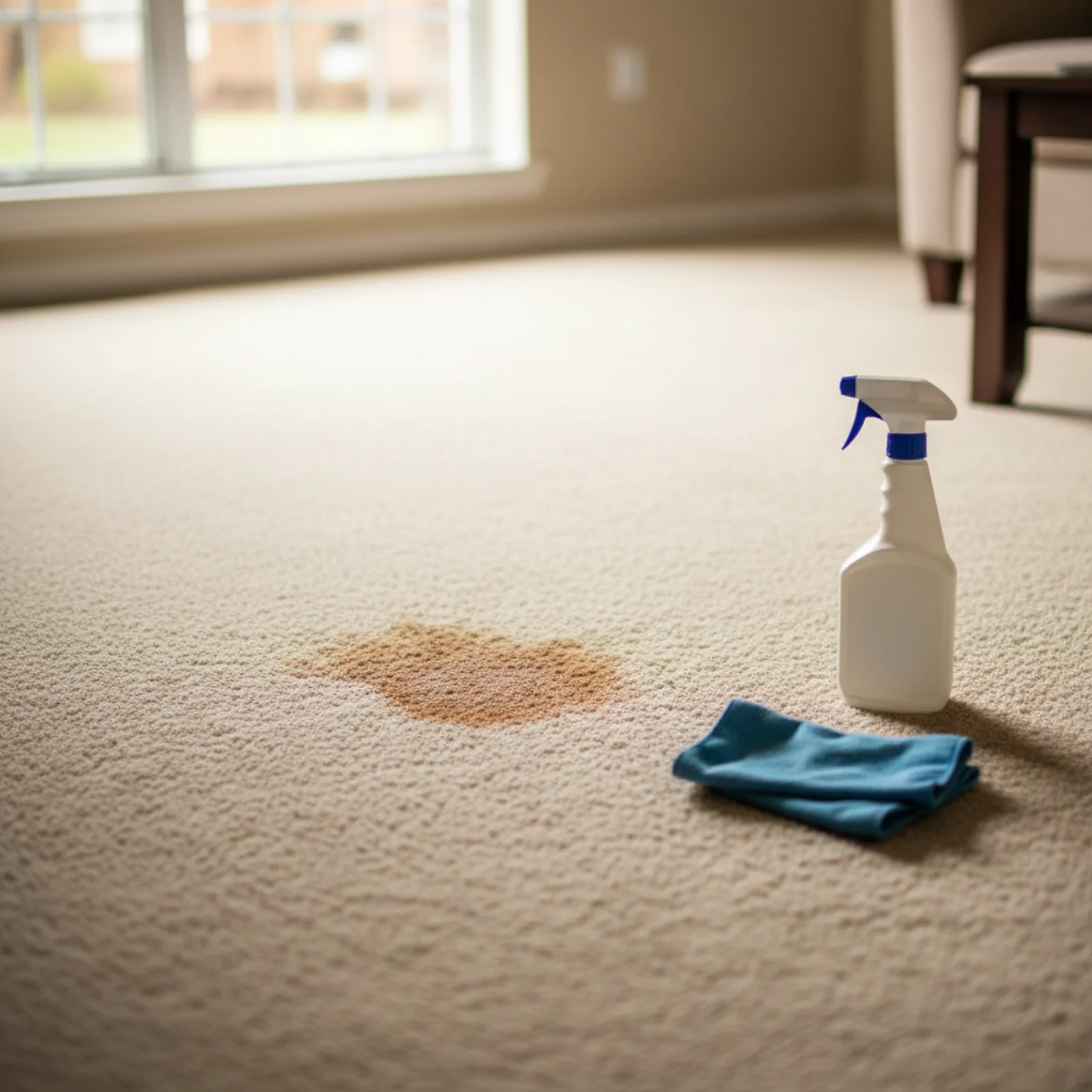
"That coffee spill from three weeks ago, the wine stain that survived two failed cleaning attempts, the mystery mark you noticed yesterday and have no idea how it got there. Set-in carpet stains are stubborn, but they are not unbeatable. Here is exactly how to get them out, and what to do when home methods stop working."
Introduction
Some carpet stains come out the first time you blot them. Others sit there for weeks, mocking you, surviving every attempt with the standard bottle of carpet cleaner you grabbed from the store. The longer a stain has been on your carpet, the deeper it has worked its way into the fibers, and the more strategic your removal approach has to become.
Whether you are dealing with a high-traffic family room in West Fargo, a rental property in Moorhead getting prepped for new tenants, a townhouse near downtown Fargo, or a finished basement in Horace, Harwood, Casselton, Kindred, or Mapleton, this guide walks you through what actually works on stains that have already had time to set. No vague advice. No products that sound good but fail in practice. Just a real, methodical process.
Why set-in stains are harder to remove
When a spill first lands on your carpet, the liquid is sitting on top of the fibers and has not yet bonded with them. That is the easy moment. Catch it then, and most stains lift cleanly with cold water and a basic blotting technique.
Set-in stains are different. As the moisture evaporates, the pigment, oils, or organic material in the spill chemically bond with the carpet fibers. Pet urine breaks down and crystallizes. Coffee tannins lock into the carpet backing. Red wine pigments penetrate and darken with exposure to air. By the time you decide to address the stain, you are no longer cleaning the surface. You are dealing with something that has become part of the carpet itself.
The good news is that most set-in stains can still be removed. The bad news is that the wrong product applied to the wrong stain on the wrong carpet type can permanently damage the fibers and make the stain worse than the day you spilled.
That is what this guide is built to prevent.
Identifying your carpet type before you start
Before you apply anything, identify what your carpet is made of. Different fibers respond very differently to cleaning solutions, and using the wrong product can melt synthetic fibers, strip natural ones, or set the stain permanently.
Nylon is the most common carpet fiber in homes across the Fargo-Moorhead area, particularly in newer builds in Horace, Harwood, and West Fargo. It is durable, resistant to most cleaning solutions, and forgiving of stronger treatments. Most home stain removal methods will work on nylon.
Polyester is increasingly common in budget-friendly carpets and rental properties. It resists water-based stains naturally but is more vulnerable to oil-based stains, which bond easily with the fiber and can be very difficult to remove.
Olefin (also called polypropylene) is often used in basement carpets and indoor-outdoor installations. It is highly resistant to water-based stains but can be damaged by solvents and high heat.
Wool is the most sensitive of all common carpet fibers and requires the gentlest approach. Bleach, alkaline cleaners, and aggressive solvents will damage wool permanently. If your home has wool carpets, your safe options are very limited and professional help is often the right starting point.
If you are not sure what your carpet is made of, check the manufacturer tag (often found on a corner or along the edge), look up the manufacturer specifications for your home, or contact your property manager or real estate agent if you are renting.
The five most common set-in stain categories
Set-in carpet stains fall into a handful of categories, and each category responds best to a different approach. Trying to use one universal cleaner for all of them is the most common reason home stain removal fails.
Tannin stains include coffee, tea, red wine, juice, and most fruit-based spills. These stains are organic and acidic, and they respond well to a mixture of white vinegar and warm water, or to enzymatic cleaners designed to break down organic compounds.
Protein stains include blood, milk, dairy, eggs, and pet accidents. These require cold water (never hot, which sets the protein further into the fiber) and an enzymatic cleaner. Pet urine specifically should be addressed with an enzyme-based pet stain cleaner because the bacterial component is what causes recurring odor even after the visible stain has been treated.
Oil-based stains include cooking grease, butter, makeup, certain salad dressings, and lotions. These stains require a solvent-based approach. A small amount of dish soap mixed with warm water is often enough, but stubborn cases may need a dry-cleaning solvent applied carefully with a clean cloth.
Dye stains include hair color, ink, marker, and certain children's craft products. These are among the hardest stains to remove from carpet because the pigment is engineered to bond permanently. Hydrogen peroxide is sometimes effective, but on darker carpets it can also lighten the carpet itself, leaving a different kind of mark.
Combination stains are exactly what they sound like: spills that contain elements of multiple categories. A spilled latte, for example, has both tannin (coffee) and protein (milk) components. These need to be treated in the right order, starting with cold water and protein removal, then moving to tannin treatment.
Step-by-step removal for stubborn stains
Here is a reliable, surface-safe process that works for most set-in stains on most common carpet fibers.
Step one: Vacuum the area thoroughly. Loose debris, dust, and dirt around the stain will only spread and complicate the cleaning. Start with a clean field.
Step two: Test your chosen cleaner on a hidden section of carpet first. Pick a spot inside a closet or under a piece of furniture, apply a small amount of the product, wait ten minutes, and check for any color change or fiber damage before applying it to the visible stain.
Step three: Apply the appropriate cleaning solution for your stain category. Use a clean white cloth (colored cloths can transfer dye), and never pour solution directly onto the carpet. Saturating the carpet pad underneath causes mildew, separation, and long-term damage. Apply the solution to the cloth and press into the stain.
Step four: Blot, do not scrub. Press the cloth into the stain with steady pressure and lift straight up. Repeat with a clean section of cloth each time so you are absorbing the lifted stain rather than spreading it. Scrubbing damages carpet fibers, creates fuzzing, and pushes the stain deeper into the carpet backing.
Step five: Allow the solution to work. Most enzymatic and tannin treatments need ten to fifteen minutes to fully break down a set-in stain. Cover the area with a damp white cloth during this period to prevent the solution from drying out.
Step six: Rinse with cold water. Apply a small amount of clean water to the area using another clean cloth and blot up the residue. If you skip this step, leftover cleaner attracts new dirt and the stained area will appear darker over time.
Step seven: Dry thoroughly. Place a stack of clean dry towels on the cleaned area and weigh them down with a heavy book or container. Leave overnight if possible. This pulls residual moisture out of the carpet pad and prevents mildew from forming underneath.
Step eight: If the stain is still visible, repeat the process. Patience and repetition are far more effective than escalating to harsher chemicals, which is the most common mistake people make when home methods seem to fail.
What not to do
There are a few approaches that consistently make set-in carpet stains worse, and they are worth flagging clearly.
Do not use hot water on protein stains. Hot water sets blood, milk, and pet accident proteins into the fiber permanently. Always start with cold.
Do not use bleach on carpets unless the manufacturer explicitly approves it. Bleach can permanently lighten the carpet color around the stain, leaving a far more visible mark than the original spill.
Do not mix cleaning products. Combining ammonia-based cleaners with bleach, or hydrogen peroxide with vinegar, creates dangerous fumes and can damage the carpet fibers.
Do not over-saturate the carpet. Soaking the area floods the carpet pad underneath, which is much harder to dry and creates lasting odor and mildew problems that are far worse than the original stain.
Do not scrub or rub aggressively. Scrubbing damages fibers, spreads the stain across a wider area, and pushes pigment deeper into the carpet backing.
Do not assume that stronger product means better result. Most professional carpet care relies on the right product for the specific stain, applied correctly, with patience and repetition. Harsher chemicals damage carpets more often than they save them.
When to call a professional
Some set-in carpet stains have been there too long, were treated incorrectly the first time, or involve carpet types and stain combinations that exceed what home methods can safely handle. There are also situations where the stain is just one issue in a carpet that needs a broader cleaning reset.
If you are in Fargo, West Fargo, Moorhead, Horace, Casselton, Harwood, Kindred, or Mapleton, and you are dealing with carpet stains that have resisted multiple attempts, large affected areas, or a home that needs more than spot treatment, Deep Care Residential Cleaning offers professional deep cleaning services that include carpet care as part of a full-room reset.
Our home cleaning staff is trained to identify carpet types, select the right approach for each stain category, and apply professional-grade products and equipment that are not available to most homeowners. A professional deep clean from Deep Care addresses not just the visible stain in front of you, but the buildup, allergens, and trapped debris that accumulate in carpets over time and make a room feel less than its best.
Set-in carpet stains often signal that a room is overdue for a fuller cleaning, not just a spot treatment. We are here when you are ready to handle it properly.
Conclusion
Set-in carpet stains are frustrating, but they are almost always treatable with the right approach. The short version is this. Identify your carpet type before applying anything. Match your cleaning solution to your stain category. Blot, never scrub. Be patient, repeat the process if needed, and avoid escalating to harsher products that often make things worse.
And when a stain has crossed the line from a spot problem into a sign that the whole room could use a reset, Deep Care Residential Cleaning serving Fargo, West Fargo, Moorhead, and the surrounding North Dakota communities is one message away. A clean home is not a luxury. It is exactly what your home deserves.
Deep Care Residential Cleaning
Serving homeowners, renters, and landlords across Fargo, West Fargo, Casselton, Harwood, Horace, Kindred, and Mapleton, ND, and Moorhead, MN.
Request A Quote or call 701-404-8357
Rather leave it to the pros?
Deep Care Residential Cleaning's insured maids clean homes across Fargo, West Fargo & Moorhead. See our deep house cleaning in Fargo & Moorhead.